Sparkle & Safety: Navigating Holiday Decorations and Feasts with Your Curious Maine Coon

As the enchanting "Winter's Glow" descends upon us, bringing with it a flurry of twinkling lights, festive decorations, and tantalizing aromas, our homes transform into magical holiday havens. For us, it's a season of joy and celebration. For our magnificent Maine Coons, however, this festive transformation introduces a world of new, irresistible temptations – and potential hidden dangers. Their innate curiosity and playful nature make them particularly prone to investigating every new sparkle and scent. This December, building on our theme of celebrating their heartwarming presence, let's ensure their well-being by mastering "Sparkle & Safety" – a comprehensive guide to navigating holiday decorations and feasts with your curious Maine Coon.
The holidays, while wonderful, present unique challenges for pet owners. What seems innocent to us can be a serious hazard for a feline friend. A dangling ornament, a tempting string of lights, or a delicious-smelling human treat can quickly turn festive fun into a veterinary emergency. Understanding these risks and taking proactive steps to mitigate them is crucial. This detailed guide will equip you with the knowledge to create a truly joyful and safe holiday environment, allowing your gentle giant to revel in the season's magic without encountering preventable dangers.

Why Holiday Safety is Crucial for Your Curious Maine Coon
Maine Coons possess a combination of traits that make them especially vulnerable to holiday hazards:
Insatiable Curiosity: Their intelligent and inquisitive minds drive them to explore every new object, texture, and smell. A new decoration is an invitation to investigate, bat, chew, or even try to ingest.
Playful Nature: Many holiday items (tinsel, ribbons, dangling ornaments) mimic prey, triggering their strong predatory instincts and encouraging vigorous play that can lead to accidents.
Size and Agility: Their impressive size and surprising agility mean they can reach higher places, pull down larger items, and access areas that smaller cats might not.
Masking Discomfort: As discussed in previous posts, cats are masters at hiding pain or discomfort. You might not realize they've ingested something harmful until symptoms become severe.
Proactive prevention is always the best approach to ensure a happy, healthy holiday season for your beloved companion.

Navigating Holiday Decorations: Sparkle Without the Risk
The allure of festive decorations is undeniable, but many common holiday items pose significant risks to your curious Maine Coon. Here's how to deck the halls safely:
The Christmas Tree: A Majestic Hazard?
Securing the Tree:

A curious Maine Coon can easily pull down an unsecured tree.
Reasoning: Their size and climbing instincts make a wobbly tree a tempting target.
Solution: Use a sturdy, wide base. For extra security, anchor the tree to a wall or ceiling using fishing line or strong wire and eye hooks.
Tree Water Additives: If you have a live tree, the water often contains fertilizers or preservatives that can be toxic if ingested. Reasoning: Cats are drawn to standing water.
Solution: Cover the tree stand securely to prevent access. Use a tree skirt that completely blocks access or foil.
Tinsel, Ribbons, and Garland:

These are perhaps the most dangerous decorations.
Reasoning: Their shiny, crinkly, linear nature mimics prey (like snakes or worms), making them irresistible. If ingested, they can cause linear foreign bodies, leading to severe intestinal blockages that often require emergency surgery and can be fatal.
Solution: Avoid tinsel entirely. Use fabric or paper garlands that are too large to ingest, or place them out of reach. If using ribbons on gifts, remove them immediately after unwrapping.
Glass Ornaments and Fragile Decorations:

Reasoning: These can shatter, creating sharp shards that can cut paws, mouths, or cause internal injuries if ingested.
Solution: Place glass or fragile ornaments high on the tree, out of paw's reach. Opt for shatterproof, pet-friendly ornaments made of wood, felt, or plastic.
Ornament Hooks:

The small metal hooks used for ornaments can cause puncture wounds in paws or mouths, or internal damage if swallowed.
Reasoning: They are small, shiny, and easily dislodged.
Solution: Use string, ribbon, or pipe cleaners to hang ornaments, or ensure hooks are tightly secured and out of reach.
Lights and Electrical Cords:
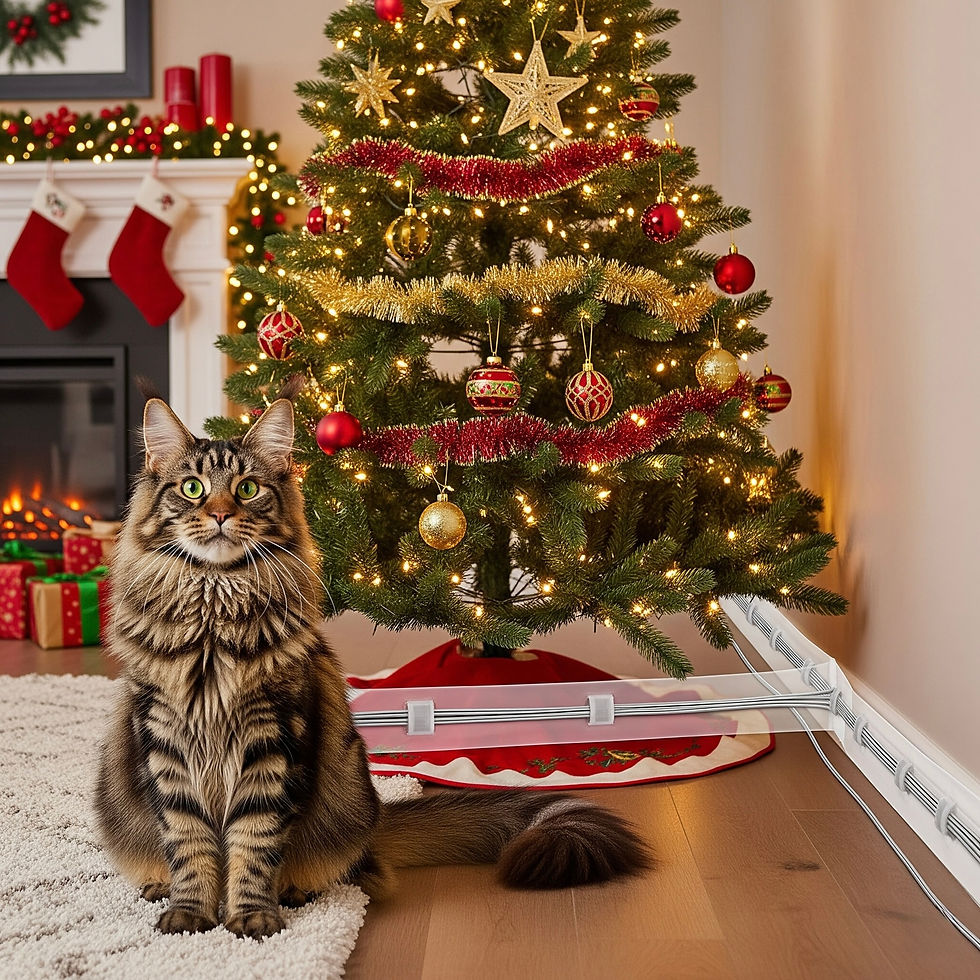
Chewing on electrical cords can lead to severe burns, electrical shock, or even electrocution.
Reasoning: Dangling cords can be tempting to bat and chew.
Solution: Secure all cords, tucking them away or using cord protectors. Unplug lights when unsupervised. Check for frayed wires regularly.
Other Decorative Dangers:
Candles: Open flames are a fire hazard and can cause burns. Reasoning: Curious cats can easily knock them over.
Solution: Opt for flameless LED candles. If using real candles, place them in sturdy, enclosed lanterns on high, stable surfaces, and never leave them unattended.
Liquid Potpourri: The oils in liquid potpourri can cause chemical burns to the mouth, skin, and eyes, and severe internal organ damage if ingested. Reasoning: They are often placed at accessible heights and look enticing.
Solution: Avoid liquid potpourri entirely. If you must use potpourri, choose dried, non-toxic varieties and place them in securely covered containers out of reach.
Snow Globes: Many older snow globes contain ethylene glycol (antifreeze), which is highly toxic and lethal even in small amounts. Reasoning: If broken, the liquid is easily accessible.
Solution: Keep all snow globes out of reach. If one breaks, clean it up immediately and thoroughly, and seek veterinary attention if you suspect exposure.
Batteries: Small button-cell batteries (often found in remote controls, small lights) can cause corrosive burns in the mouth and esophagus if chewed or swallowed. Reasoning: They are small and easily knocked loose.
Solution: Keep all battery-operated items out of reach and dispose of used batteries immediately and securely.

Feast Safely: Protecting Your Maine Coon from Holiday Foods
The holiday season is synonymous with delicious food, but many human treats are dangerous for your Maine Coon. A single bite of the wrong food can lead to severe illness.
Foods to Avoid (Highly Toxic/Dangerous):
Chocolate: Contains theobromine, which is toxic to cats, leading to vomiting, diarrhea, tremors, seizures, and heart problems. Dark chocolate is more dangerous.
Onions, Garlic, Chives, Leeks: All members of the Allium family are toxic, causing damage to red blood cells and leading to anemia. This includes powdered forms found in gravies and stuffings.
Grapes & Raisins: Can cause kidney failure in cats, even in small amounts. The exact toxic mechanism is unknown.
Alcohol: Even small amounts can cause severe intoxication, respiratory depression, coma, and death.
Xylitol: A common artificial sweetener found in sugar-free gum, candies, baked goods, and some peanut butters. Highly toxic, causing rapid insulin release, leading to a dangerous drop in blood sugar and liver failure.
Bones: Cooked bones can splinter and cause choking, or internal perforations and obstructions. Raw bones can also pose choking hazards.
Fatty Scraps & Rich Foods: Gravy, turkey skin, fatty trimmings, and rich desserts can cause severe gastrointestinal upset, vomiting, diarrhea, or a painful condition called pancreatitis.
Yeast Dough: Raw yeast dough can expand in the stomach, causing bloating and potentially a life-threatening twisted stomach (bloat). The yeast also produces alcohol, leading to intoxication.
Nutmeg: Contains myristicin, which can cause hallucinations, disorientation, increased heart rate, and seizures in large doses.
Macadamia Nuts: Can cause weakness, tremors, vomiting, and hyperthermia.

Safe Treats (in extreme moderation and plain):
Plain, Cooked Turkey: Small, boneless, skinless, unseasoned pieces of cooked turkey breast can be a safe, high-protein treat.
Plain, Cooked Salmon: Small, boneless, unseasoned pieces of cooked salmon can be a good source of Omega-3s.
Plain Pumpkin: A small amount of plain, canned pumpkin (not pumpkin pie filling) can aid digestion.
Cat-Specific Treats: The safest option is always treats formulated specifically for cats.

Managing Access to Food:
Keep Food Off Counters/Tables: Never leave platters of food, leftovers, or open containers unattended.
Secure Trash: Use sturdy, lidded trash cans that your Maine Coon cannot open or tip over.
Supervise Meal Times: During holiday meals, keep your Maine Coon in a separate room or closely supervised to prevent "counter surfing" or begging for dangerous scraps.
Educate Guests: Inform all visitors about what your cat can and cannot eat, and ask them not to give table scraps.
General Holiday Stressors & Solutions
Beyond physical hazards, the holidays can also be a source of stress for your Maine Coon due to changes in routine, noise, and visitors.
Visitors: New faces, voices, and scents can be overwhelming.
Solution: Provide a designated "safe room" with their food, water, litter box, and favorite bed. Introduce guests gradually, or keep your cat in their safe room during peak visitor times. Use pheromone diffusers.
Noise: Loud music, excited conversations, and fireworks can be frightening.
Solution: Provide quiet zones. Play calming music or white noise to mask jarring sounds.
Routine Disruption: Travel, late nights, and altered feeding schedules can cause anxiety.
Solution: Try to maintain core routines (feeding, play, litter box cleaning) as much as possible. If traveling, ensure their comfort and familiarity with their carrier.

What to Do in an Emergency
Despite your best efforts, accidents can happen. Knowing what to do in a holiday emergency is critical:
Signs of Poisoning/Ingestion: Vomiting, diarrhea, lethargy, tremors, seizures, excessive drooling, difficulty breathing, or unusual behavior.
Contact Your Veterinarian Immediately: Do not wait for symptoms to worsen. Have your vet's number, as well as the number for an emergency veterinary clinic (open 24/7), readily available.
Pet Poison Helpline: Keep the number for a pet poison control center handy (e.g., ASPCA Animal Poison Control Center: (888) 426-4435 – a consultation fee may apply).
The Gift of a Safe & Joyful Holiday
The holiday season is a time for warmth, love, and cherished memories. By taking proactive steps to ensure "Sparkle & Safety," you can protect your curious Maine Coon from preventable dangers, allowing them to enjoy the festive atmosphere without risk. Their well-being is the greatest gift you can give them. With vigilance and preparation, your magnificent Maine Coon can truly be a part of your holiday joy, adding their unique charm and heartwarming presence to a safe and happy celebration for all.

What are your top tips for Maine Coon holiday safety and happiness during the bustling holiday season? Share your wisdom in the comments below!


Comments